
Can a Professional CV Be 2 Pages

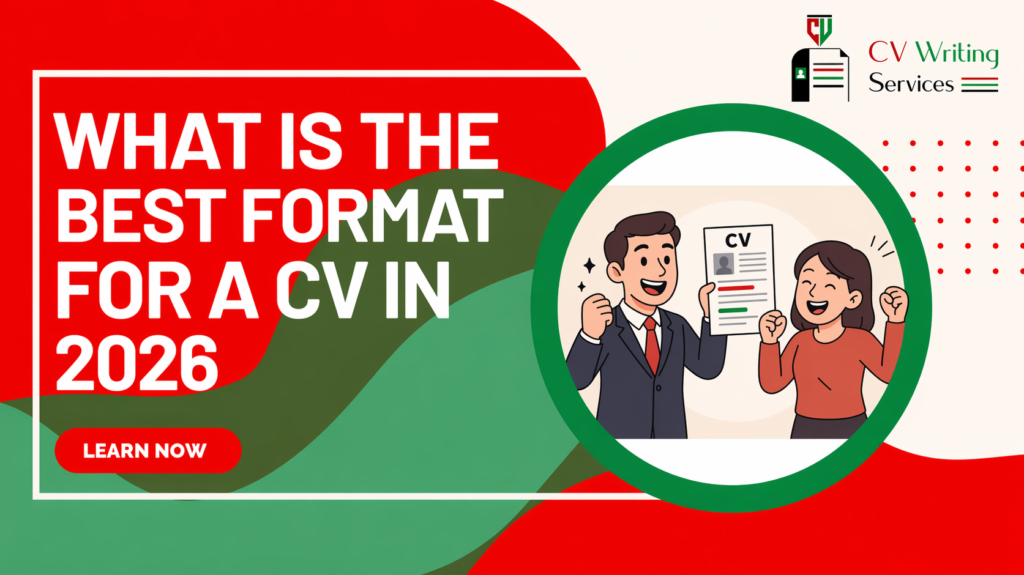
What is the Best Format for a CV in 2026?
April 17, 2026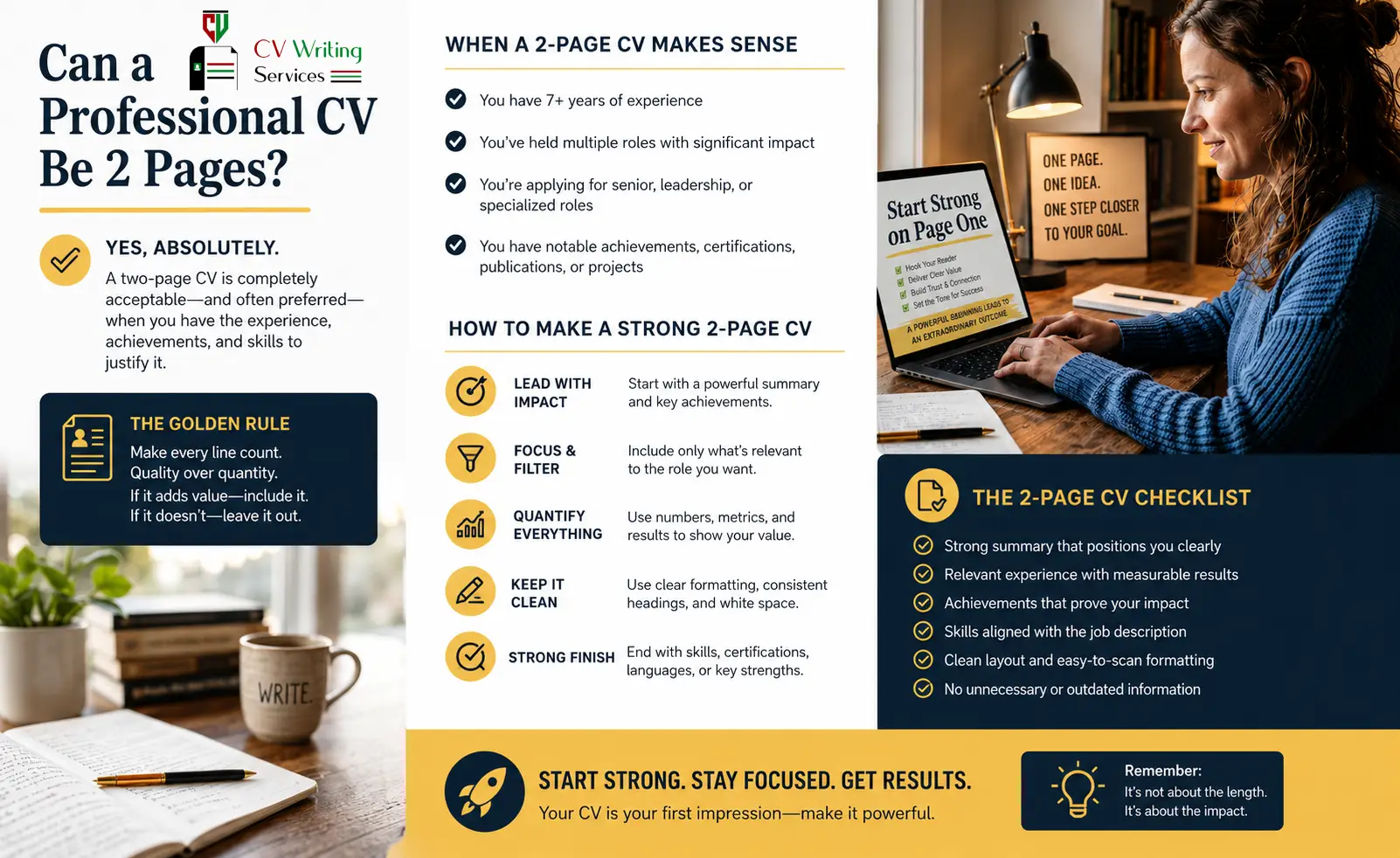
If there’s one part of writing a CV that we’re asked about more than any other, it’s the following: How long will my CV be?’ Would it have to be one page, or can it stretch to two pages? The truth of the matter is, there’s no one-size-fits-all approach. In terms of actual length, there is no one-size-fits-all answer to how long your CV should be – it will depend on several factors, including your experience level, industry, and role.
The following discussion outlines the pros and cons of submitting a two-page resume, which, according to most experts, should be limited to one page.
What Should be Included in a CV
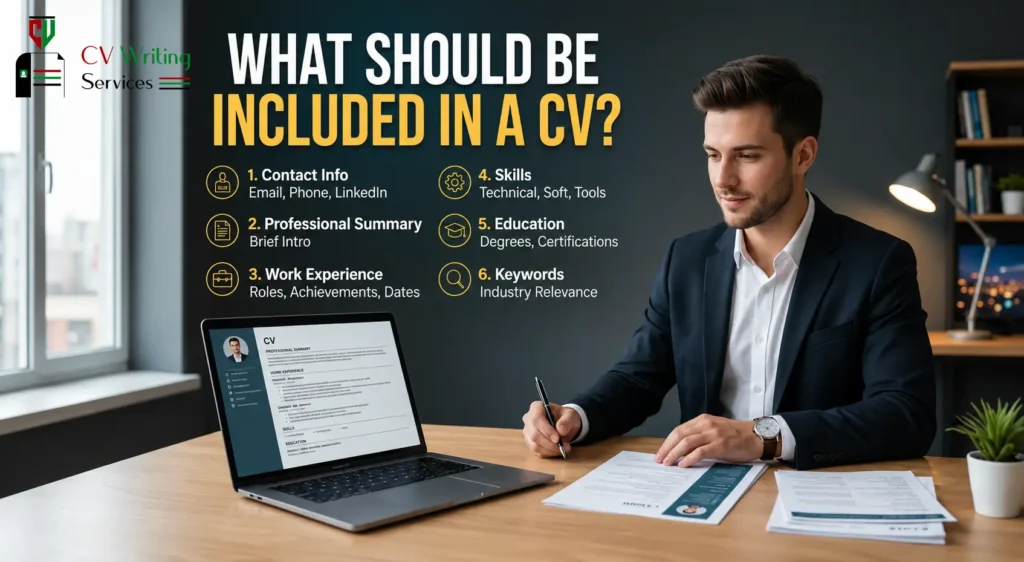
There’s more to your CV (curriculum vitae) than listing your work experience, that is for sure. It is a personal marketing tool that can serve as an additional piece to your resume, highlighting who you are, what you have done, and why an employer should meet you. Employers are inundated with hundreds of applications, so your CV needs to immediately have an impact but also contain all the relevant information at a glance.
It isn’t pages as much as quality. As a general rule, most professionals should allocate at least two pages of resume space to create an executive summary and include otherwise overlooked entries on their executive-level resumes.
When Is a Two-Page Resume OK
A two-page résumé is entirely acceptable — and in some cases, really useful for professionals with a long track record or unique experience. So, when does a two-page CV have some life left in it?
Mid-Level and Senior Professionals
If you have worked at your job for greater than 7–10 years, that’s going to be true of your experience, responsibilities & achievement level as well – and all of this is A-Okay and expected! You can craft a professional narrative that fits on a two-page document, reflecting both progression and impact.
Academic and Research Roles
In academia and industry, a CV typically includes publications, conferences, research, and other professional activities. These things take up space, so a long CV is necessary and expected. Professional Writers from CV writing services Dubai assist you in creating a professional-looking, tailored, and well-organized CV.
Technical or Specialized Careers
IT, engineering, accounting, and financial roles require a lot more detail, as they need to focus on skills such as database support, IT systems, the number of servers handled at one time, medication management systems, and training materials, among others. One page might just make it all crunched up and not easily understandable and clear.
Freelancers and Consultants
Coaches who have a history of working with various clients or projects may prefer to delve even further, and two pages will provide the necessary space to properly describe their relevant experience.
Why Length Isn’t Everything
‘It’s the relevance, not how long it is, that matters. There should never be a sense that a two-page résumé is two pages just for the sake of being two pages. It’s nice to have comprehensive CVs, but not if every section is there for the sake of it.
Structuring a Two-Page CV Effectively
Once you’ve determined to use a two-page resume, it is now time to figure out what will go on those two pages. The aim is to make it clear, readable, and digestible. The following are ways to make it work:
Start Strong on Page One
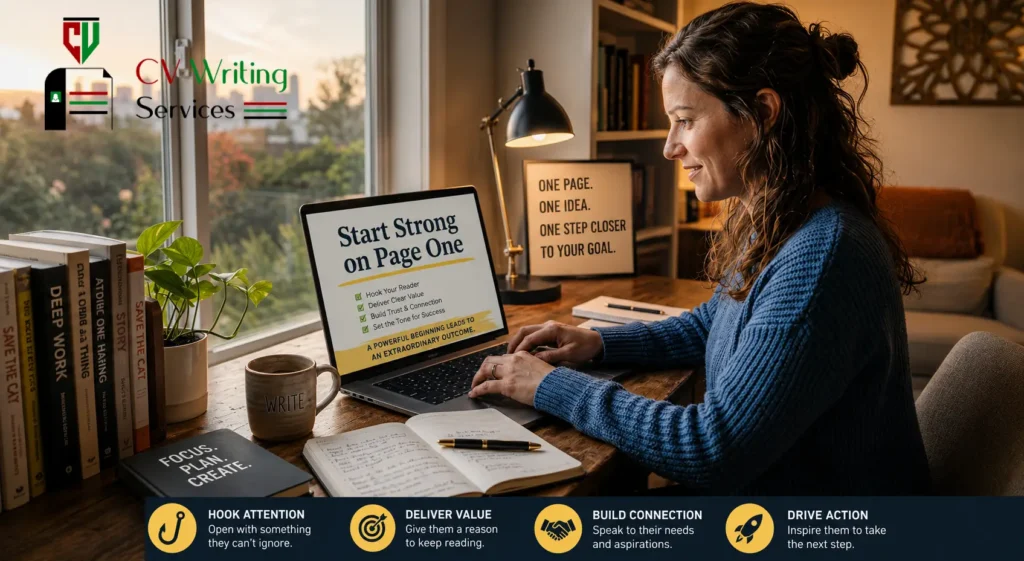
Your CV’s opening page should entice readers. Place your name, contact details, professional summary, and key skills at the top. Then your next one down or most recent and valid. You do not get a second chance to make that first impression, and in the world of work, it will usually be formed within the first few seconds of reading, so your top half needs to be strong and focused.
Maintain Consistent Formatting
The two pages require the same layout, font size, and style. Include clear headers, bulleted lists, and ample white space so the document is easily scannable.
End with a Strong Finish
Round off your CV with additional sections, such as Professional Certificates, Languages, or Volunteering, which add value and demonstrate your expertise.
Two-Page CV Do’s and Don’ts: What errors to avoid on a two-page CV.
Although a two-page resume provides more room, here are some things you should avoid:
Repeating: Do not repeat shared info between characters and adversaries.
Focus on Unique Achievements.
Nothing you need to know: Exclude unrelated part-time jobs or skills that are out of date.
Formatting: The CV is cluttered and difficult to read.
Lack of focus: Every section should address your career goals.
Recall that in the beginning, a recruiter will only spend 10 seconds to read through a CV. Just make sure that you’re most important accomplishments and skills are visible.
How Do You Know If Two Pages Are Right for You
When to Think About your CV Length:
Level of Experience: If you’ve worked long and hard for many years, have you held a variety of different leadership roles or managed large projects? Two pages are totally cool.
Industry Standards: There are no rules for how long you should make your CV in some industries (see, consulting or academia).
Final Thoughts
A professional CV can absolutely be more than two pages long, assuming there are elements that would add value and contribute to your story with every section. The primary objective is to ensure clarity, relevance, and impact, rather than adhering strictly to the page-one submission norm.
With today’s job market, employers are concerned less with page count and more about just how you’re effectively conveying your qualifications. A well-formatted 2-page CV will make a stronger first impression on a recruiter, as it demonstrates less urgency and shows more focus.